Packing for a Changeable Day Away
Packing for a changeable day away starts with your plans, helping you choose a compact bag and carry only the personal items each activity needs.
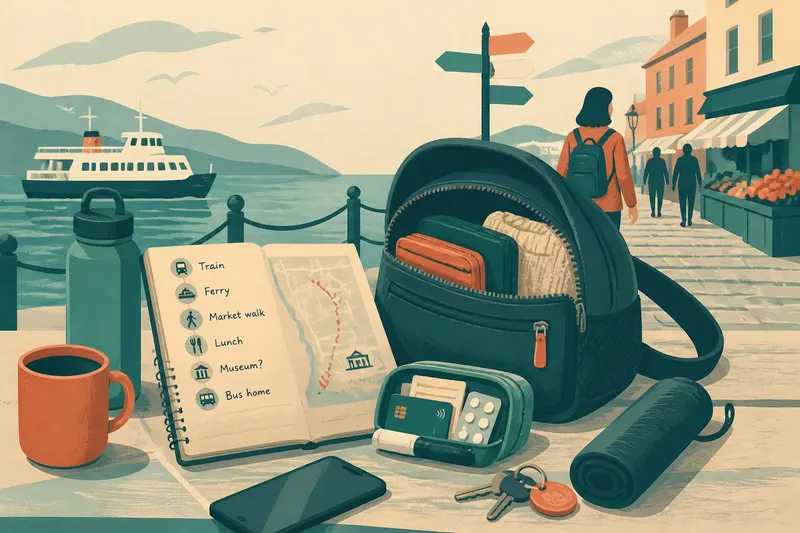
You have a train to catch, a riverside walk in mind and a table booked for lunch, but the forecast keeps shifting. Packing for a changeable day away is easier when you start with those plans, not a pile of objects. Write down what you will actually do, then choose a compact day bag and match each item to a moment in the day.
This routine works for a city visit, a coastal outing or a day that crosses between indoor and outdoor places. It is season-neutral: a warm layer may matter on one outing, while a notebook or a water bottle matters more on another. The point is not to prepare for every possible turn. It is to carry what supports the day you have chosen, with a little room for an ordinary change of pace.
Start with the day
Before opening a drawer or reaching for a bag, sketch the day in order. Include the journey, planned activities, meal stops and the trip home. A note in your phone is enough. If the day is loosely arranged, write down the likely options rather than inventing a precise timetable.
Make each entry concrete. “Explore” is hard to pack for; “walk along the harbour, visit the indoor market, then take the bus back” gives you useful clues. The route and setting may matter as much as the activity. A cobbled lane, a long stretch between cafés or a quiet gallery can each change what is comfortable to carry.
- Write down the main activity and where it takes place.
- Note how you will travel between stops, including any change of transport.
- Mark planned indoor and outdoor stretches.
- Add personal needs that shape the day, such as taking regular medication or keeping glasses close to hand.
- Leave uncertain ideas as options, rather than packing for every one of them.
Say you plan a ferry ride, a walk through a market and a late lunch, with an optional visit to a small museum. You could note that the ferry is exposed, the market involves browsing on foot and the museum may mean keeping your hands free. Those observations point towards a secure bag, a light layer if conditions call for one, and a payment method. They do not make the optional museum a reason to pack an extra outfit, book or device unless you know you will use it.
Match items to activities
Now make a short item list beside the plan. Give each item a job. A phone might cover navigation, messages and tickets; a bank card might cover a planned meal; a bottle might support a long walk where refills are uncertain. If one item serves several parts of the day, that is useful. If an item has no clear connection to an activity or personal need, pause before adding it.
This is a practical way to separate essentials from “just in case” objects. Personal medicines, an inhaler or a hearing aid belong on the list because they serve a real need, even if you hope not to use them. By contrast, carrying several alternative entertainment options may add bulk without helping the day you have planned.
Check your list against the sequence, not just the destination. A ticket needed at the station should be easy to reach before boarding. A camera intended for a viewpoint should not be buried beneath a jumper. Put access in the plan: mark which items you will need on the move and which can stay tucked away.
For a simple visual check, use a note with two columns: “activity or need” and “item”. It keeps the reasoning visible. If the list grows, look for duplicate jobs rather than trimming something important. A phone and a separate paper itinerary, for instance, may both be useful if one is your preferred navigation method and the other contains booking details you need to show.
Choose the bag
Once the items are clear, choose a bag that fits them without forcing you to pack around empty space. A small cross-body bag can keep essentials accessible in a busy market. A compact daypack may feel better for a longer walk or for carrying a layer. A tote can suit a short outing with mostly indoor stops, but may be less comfortable if you expect to walk for hours.
Consider access and movement as well as capacity. Can you reach a travel card without taking everything out? Does the bag stay close when you turn through a crowd? Is there a pocket or small pouch for items that should not disappear among snacks and tissues? A zip-top pouch is often enough to keep tickets or personal essentials together; the bag does not need a complicated organiser system.
Place the heaviest objects near your back if the bag allows it, and keep delicate items away from anything that could press or spill. Put items you expect to reach during the journey near the top or in an easy-to-open pocket. These are small choices, but they can make a stop at a ticket barrier or café less fussy.
When choosing between bags you already own, compare them using the planned contents rather than their appearance alone. The larger one may invite you to add unneeded extras. The smallest one may leave no room for a layer you have deliberately included. Pick the bag that carries the list comfortably and leaves access straightforward.
Pack in two passes
Do the first pass when you make the plan, then leave the bag open until the day before. This gives you time to check tickets, weather and opening arrangements without turning a forecast into a reason to pack every possible item. Use the second pass to remove anything that no longer matches the activities.
- After planning: List the activities, routes and personal needs. Add only items with a clear job.
- When details settle: Check travel arrangements and any venue guidance that affects what you can bring.
- The evening before: Put aside clean, ordinary items such as a layer or reusable bottle, based on the day’s plan and conditions.
- Before leaving: Add items you use at home, such as your phone, keys or prescribed personal essentials, and check that tickets and payment are accessible.
- At the door: Lift the bag and notice whether it feels awkward or overfilled. Remove an unassigned extra, or switch to a bag that suits the planned contents.
For weather-sensitive clothing and restricted items, follow the relevant product label, carrier or venue instructions and local rules. For personal health needs, use your usual professional advice rather than changing what you carry based on a general packing list.
Keep the final check brief. It is not a second chance to imagine a different trip. Compare the contents with your notes, confirm the essentials are present and make sure you can reach what the first part of the journey requires. A spare pocket is useful; filling it simply because it is there is not.
When plans change?
What belongs in a day bag?
Start with personal essentials, travel documents or tickets, payment, and items tied to the day’s activities. Add practical comforts only when they answer a specific need, such as a layer for an exposed stop or a bottle for a long walk.
How do I pack for mixed indoor and outdoor plans?
Use the sequence of places to decide what needs to be reachable and what can stay packed. A removable layer or a small pouch may help, but there is no need to carry separate supplies for each setting if one item serves both.
What if the weather forecast changes?
Check the forecast again before you leave, then adjust for the activities you still intend to do. If an outdoor walk is replaced by an indoor visit, remove items that only served the walk; if it remains, add the suitable personal layer or accessory.
How can I avoid overpacking?
Ask what planned activity or personal need each object supports. If the answer is only “it might be useful”, consider leaving it at home unless it addresses a meaningful need you cannot meet another way.
Leave room for ease
A compact bag should help you move through the day, not turn the outing into a test of how little you can carry. If you rely on a particular item for comfort or accessibility, include it even when it does not fit a neat activity list. The method is a way to make choices, not a rule that every person needs the same contents.
Before setting off, consider the first transition: getting from your door to the station, car park or meeting point. Put the ticket, keys or travel card where you can reach them without unpacking. Then close the bag and stop revising. Packing for a changeable day away means preparing for the plans you have, while keeping enough attention free to enjoy the places between them.